


Nostalgic Cabin
Living Room Update
Blending the
Old With the New
Professional “After” Photos: Lisa Novak Photography, Kamloops, BC
Before/During Photos: Kelly Grimes
Living Room
Design Updates
The homeowners stayed true to their word and only opted for minor interior changes in the cabin’s original main living room and that was to remove and enclose one window, in order to change the seating area and offer more seating in the small space.
Removing a Window
for Living Room Improvements
The window, a side wall window, although it was large, was found to NEVER have the blinds up due to it’s proximity to the neighbor’s backyard & driveway.
There would be plenty of natural light streaming in from the lakeview windows and of course, since the addition was in progress and new lighting would be installed and some old lighting updated, the window was simply no longer needed.
With it being removed, it allowed the infamous cabin “games hutch” (although a new larger, wider, taller version of the previous one) could be moved over, closer to the front window, directly in alignment with the original wood stove. Having these two significant fixtures and furnishings across from one another, allowed the space plan to evolve into a more conducive seating arrangement—balancing swivel chairs on one side and a sofa chaise across for the perfect conversational setting.
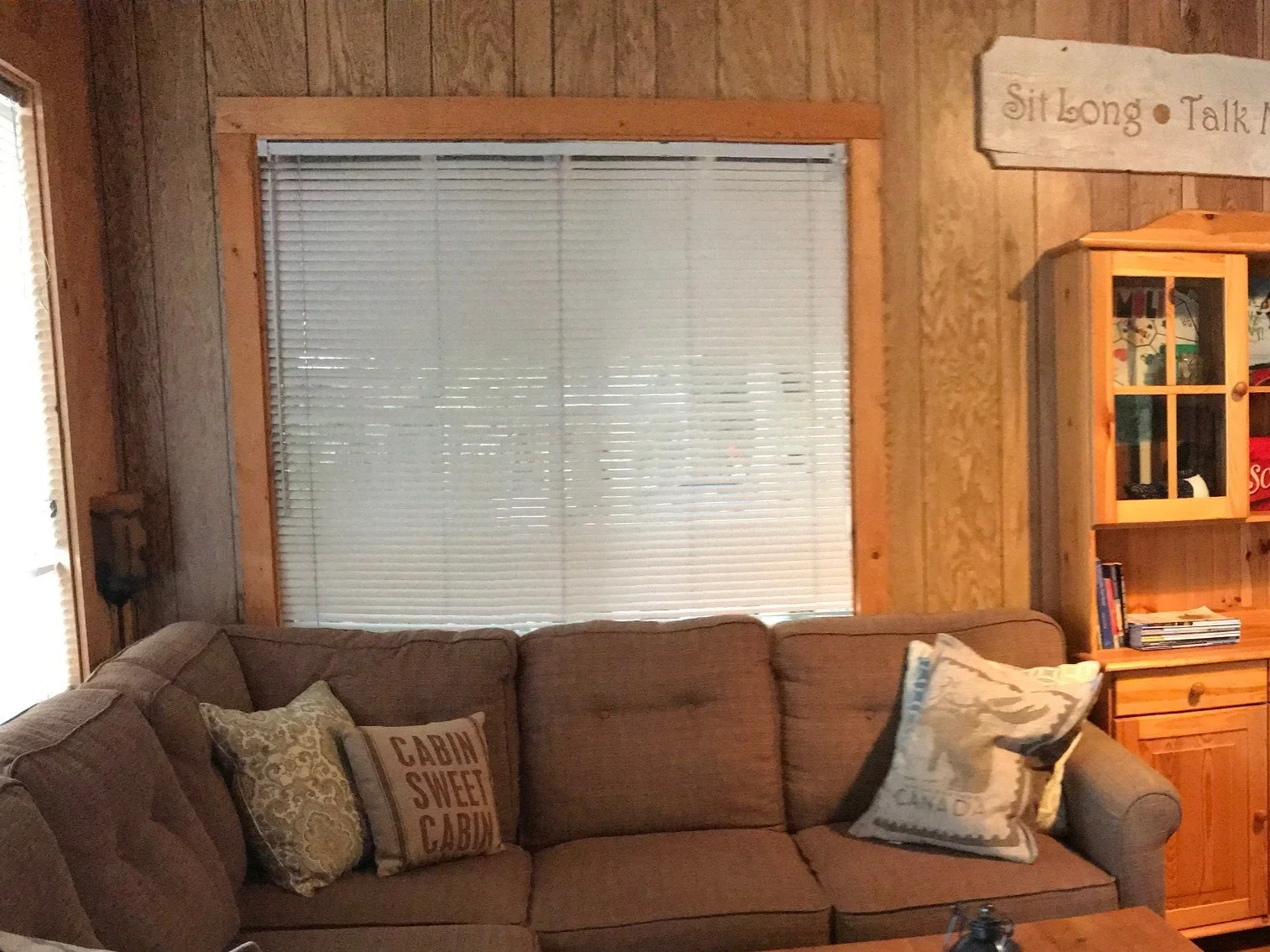
Window with mini blinds was always closed
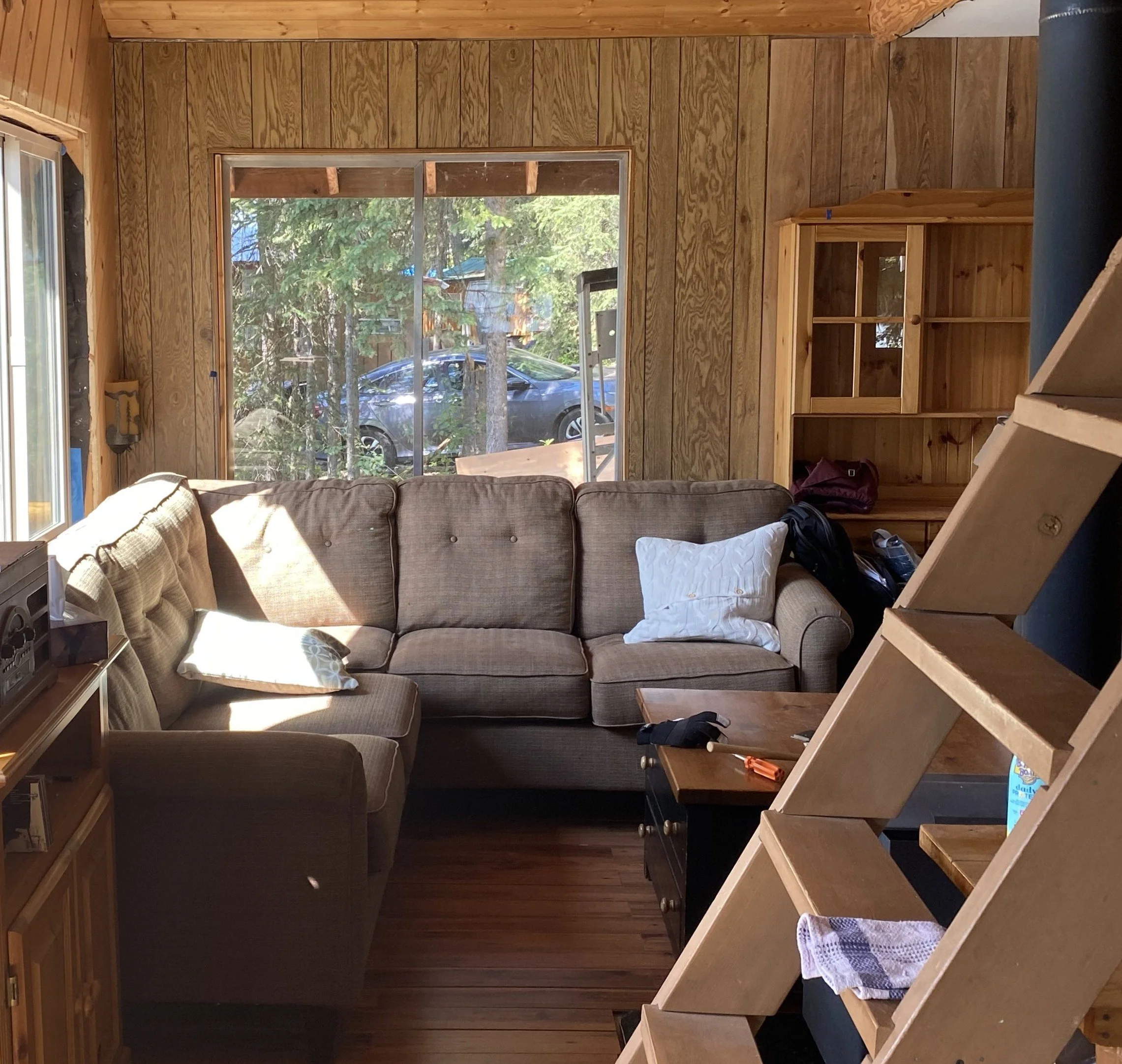
Deemed not functional, therefore not needed.
Window is removed and will be enclosed

Window and wall receives repurposed paneling from the closet removal.
Furnishings layout is improved as (new) large hutch has more wall space as it shifts left.
Fun fact: Even the “rainbow frame” shown here, received a recycled update, by repurposing the “Sit Long, Talk Much, Laugh Often” sign that would no longer have a spot in the cabin decor (with being a sign and the trend is no longer).
Narrow, High Bar Table
Allows for Additional Seating

Bar Stools, CF Interiors
The new living room seating arrangement made room for a narrow bar table at the back, complete with two stools and a view of the lake. Slightly elevated above the sofa in front of it, this perch feels like a natural extension of the living area. With the record collection close at hand, spinning vinyl has become a highlight—perfect for the retro charm of this 80s-style cabin.
Fun fact: The live-edge pine slab used for the table was found right on the property. Though a bit twisted, it was still salvageable and has been repurposed into a functional, character-filled piece.
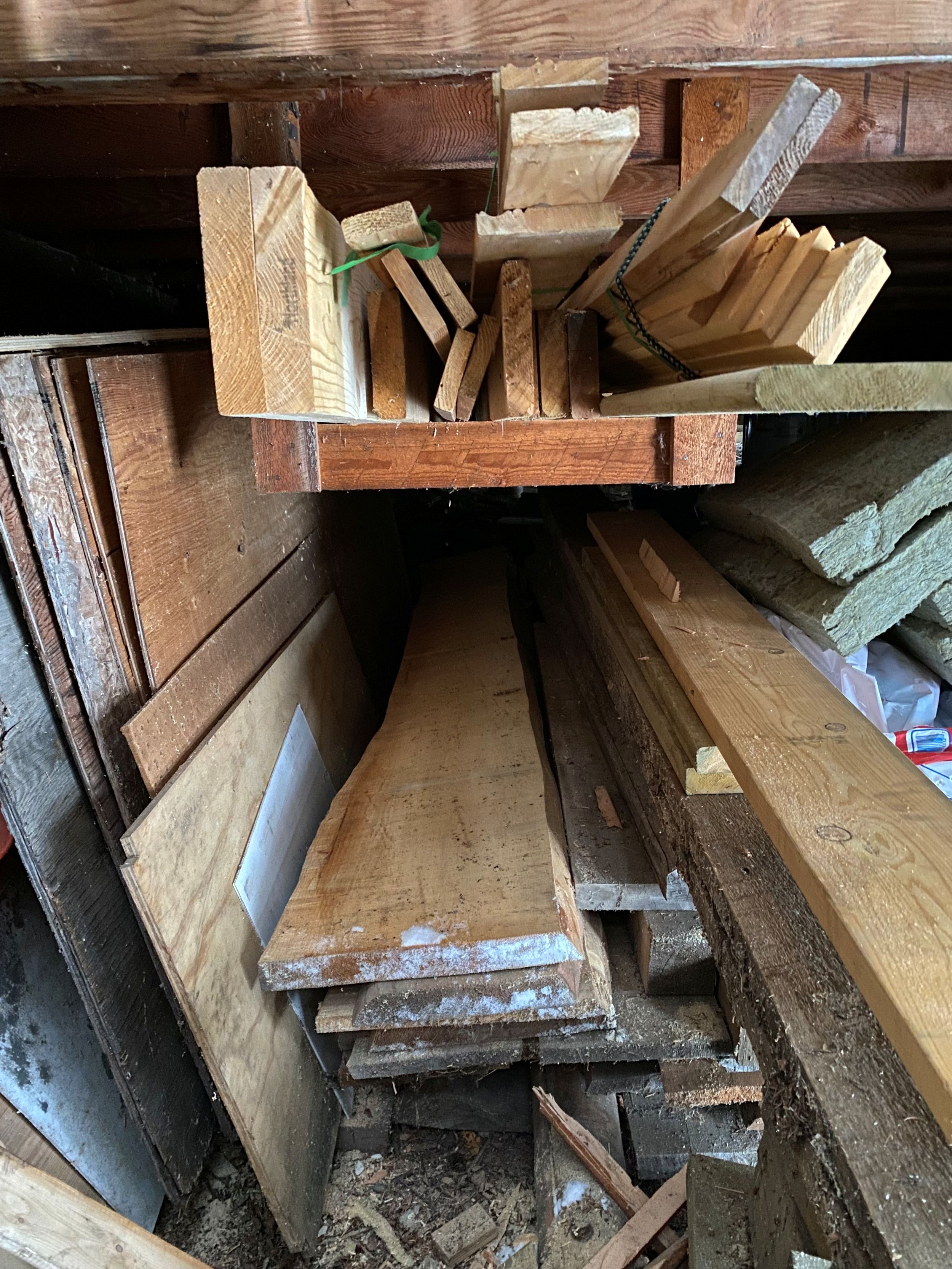
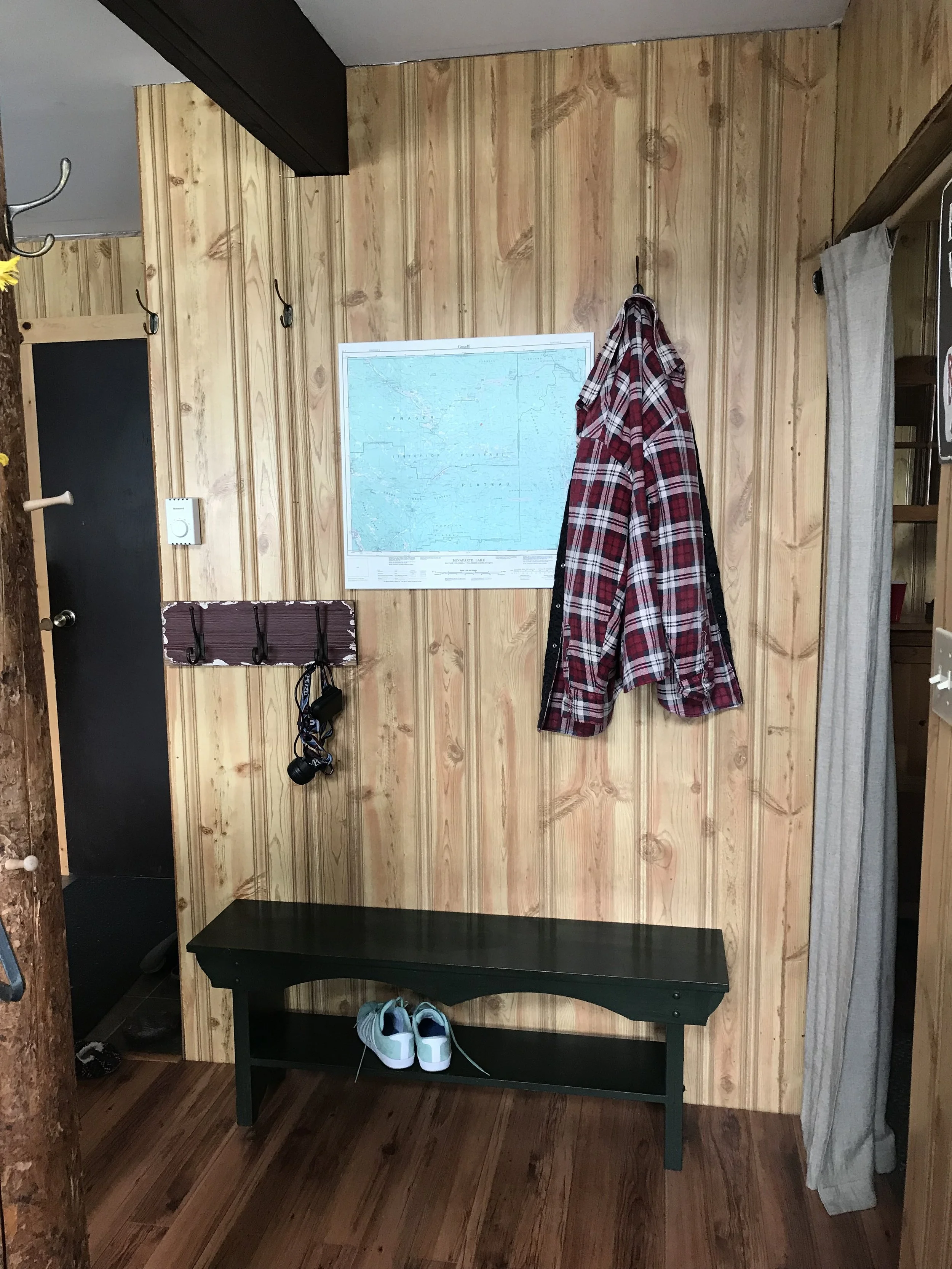
Sustainable Design—Repurposing Vintage Paneling
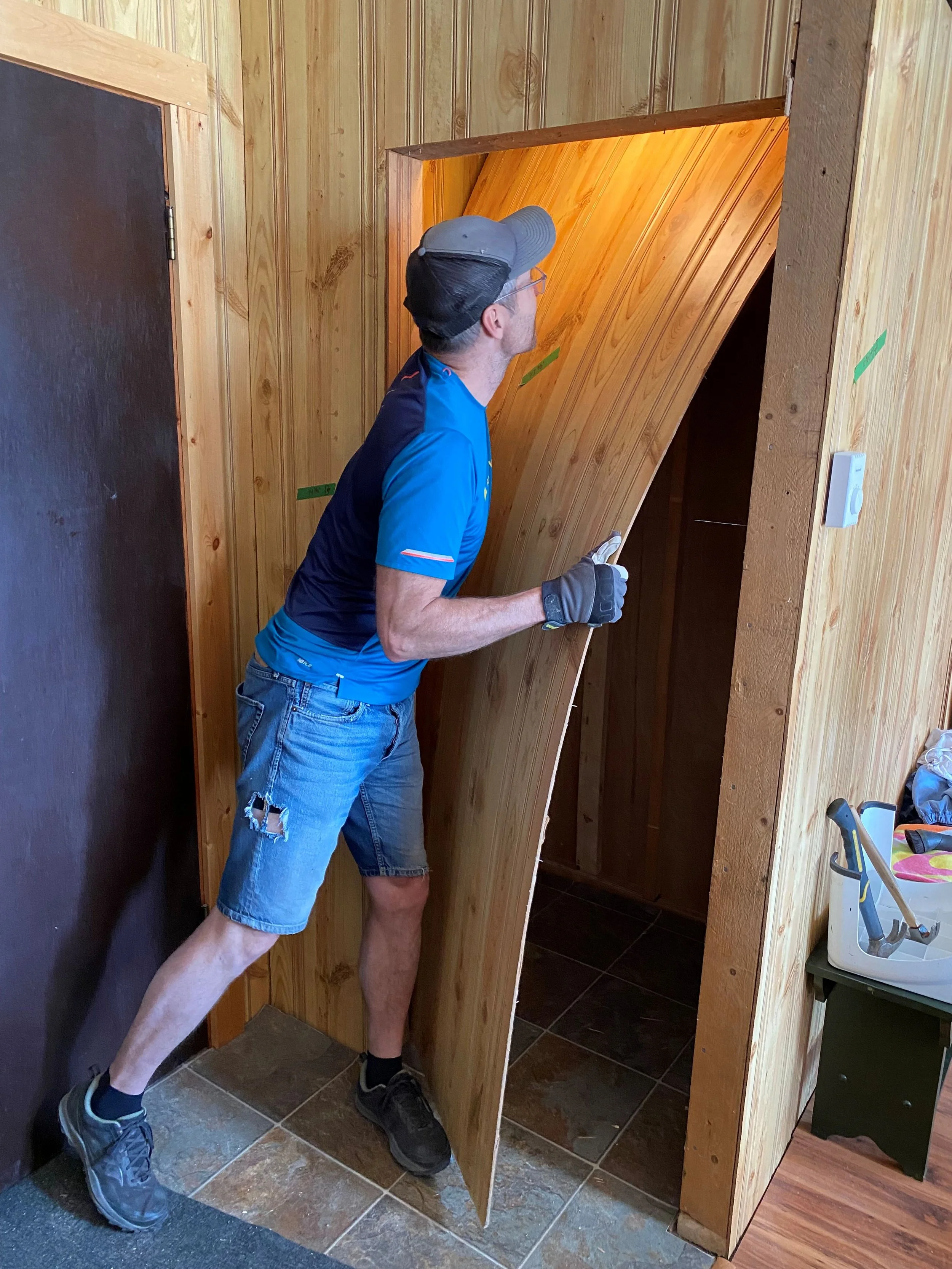
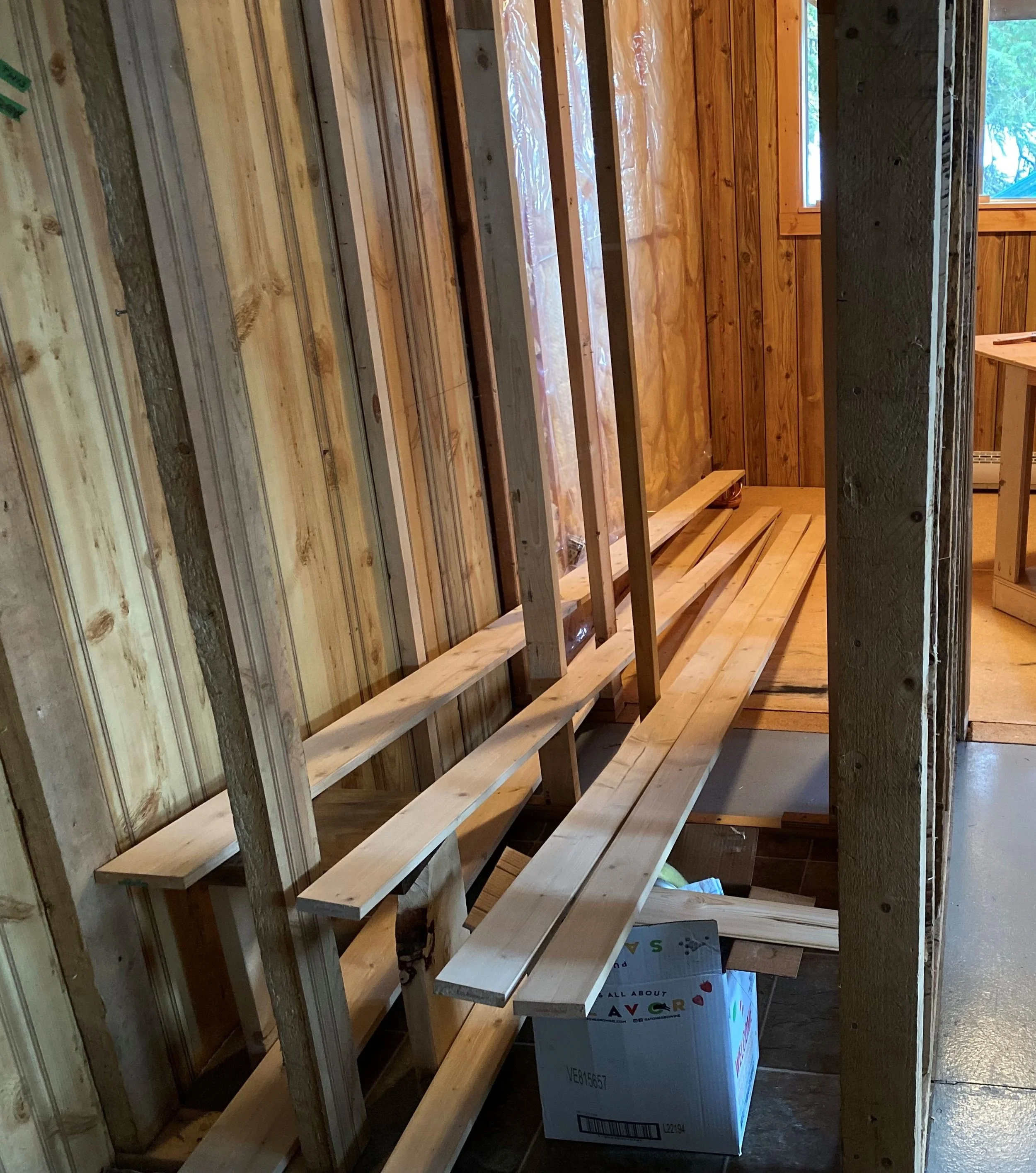
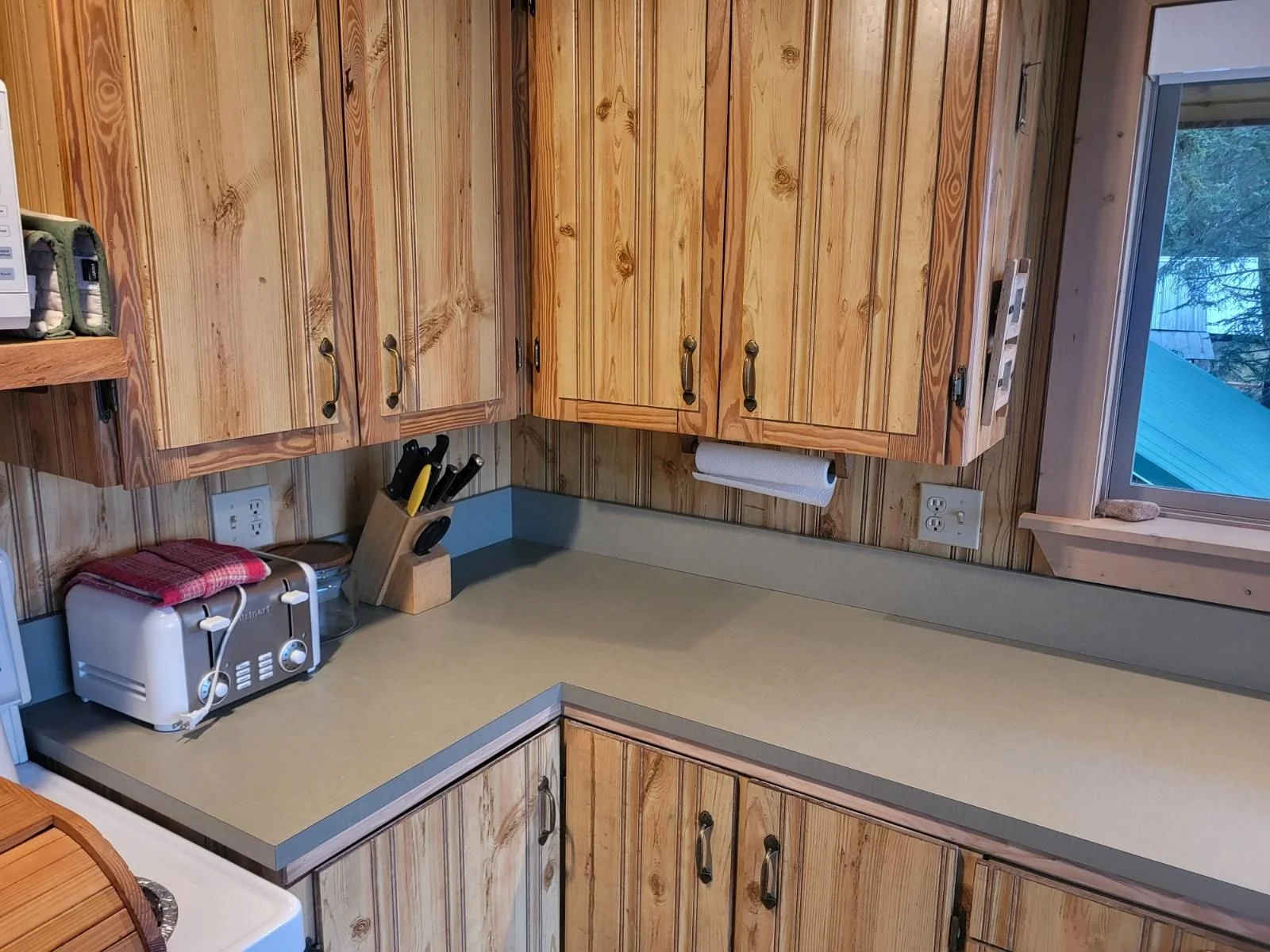
Knowing that the original entry closet would be removed—and that the adjacent bedroom would also be updated, this created an opportunity to thoughtfully salvage the 4’x8' faux-pine paneling sheets for the far-side living room wall. Re-cladding that wall with matching paneling not only refreshed it at no additional cost but also created a more unified look, helping the living room and nearby kitchen blend together and allowing the entire area to feel larger and more open.
In a small space, letting one dominant color carry through helps the eye move more easily, reducing visual breaks. That sense of calm continuity is what makes the space feel more relaxed—exactly the intention when you escape to a cabin.
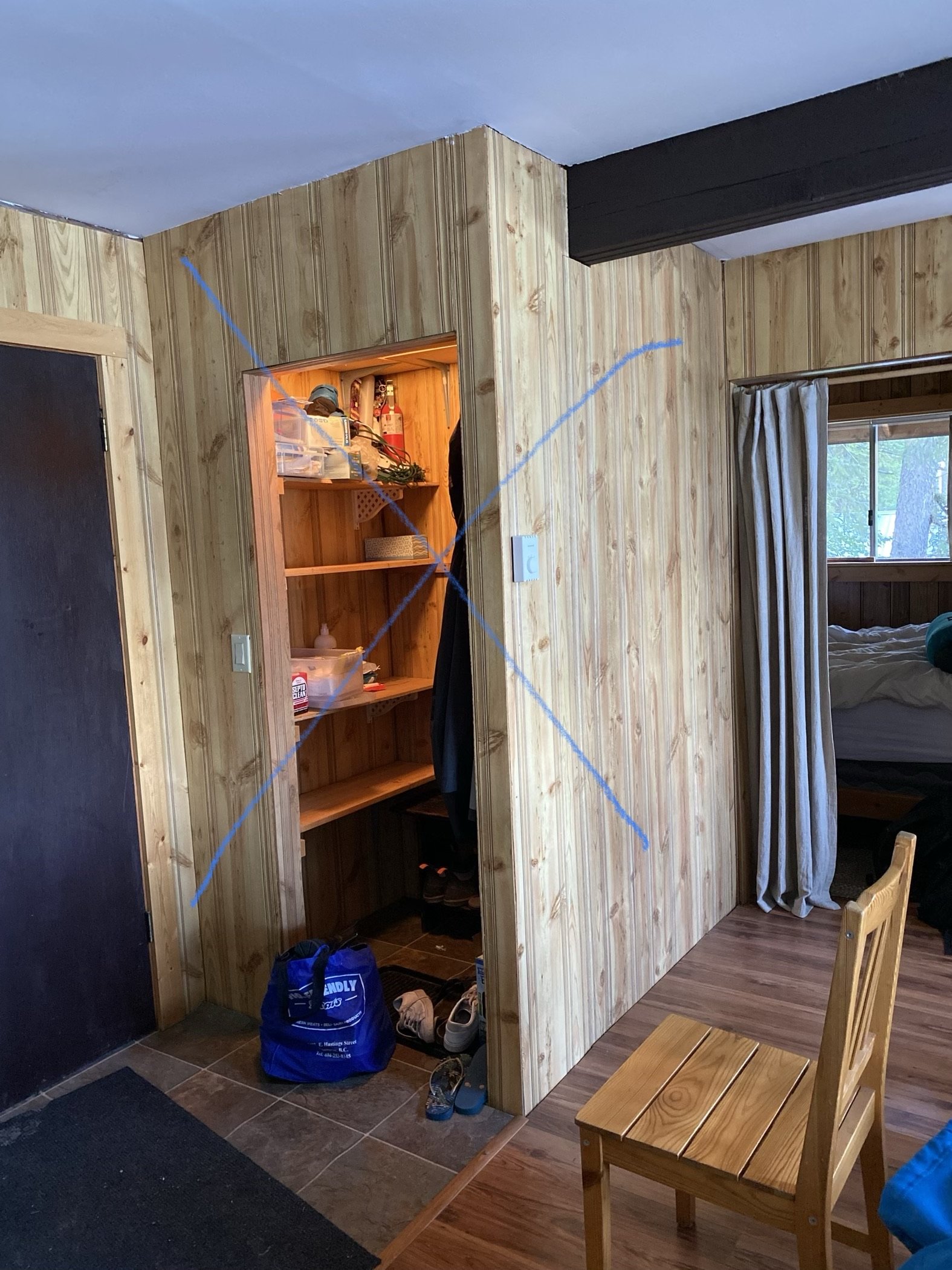
Before: Closet intruding
Paneling Removal
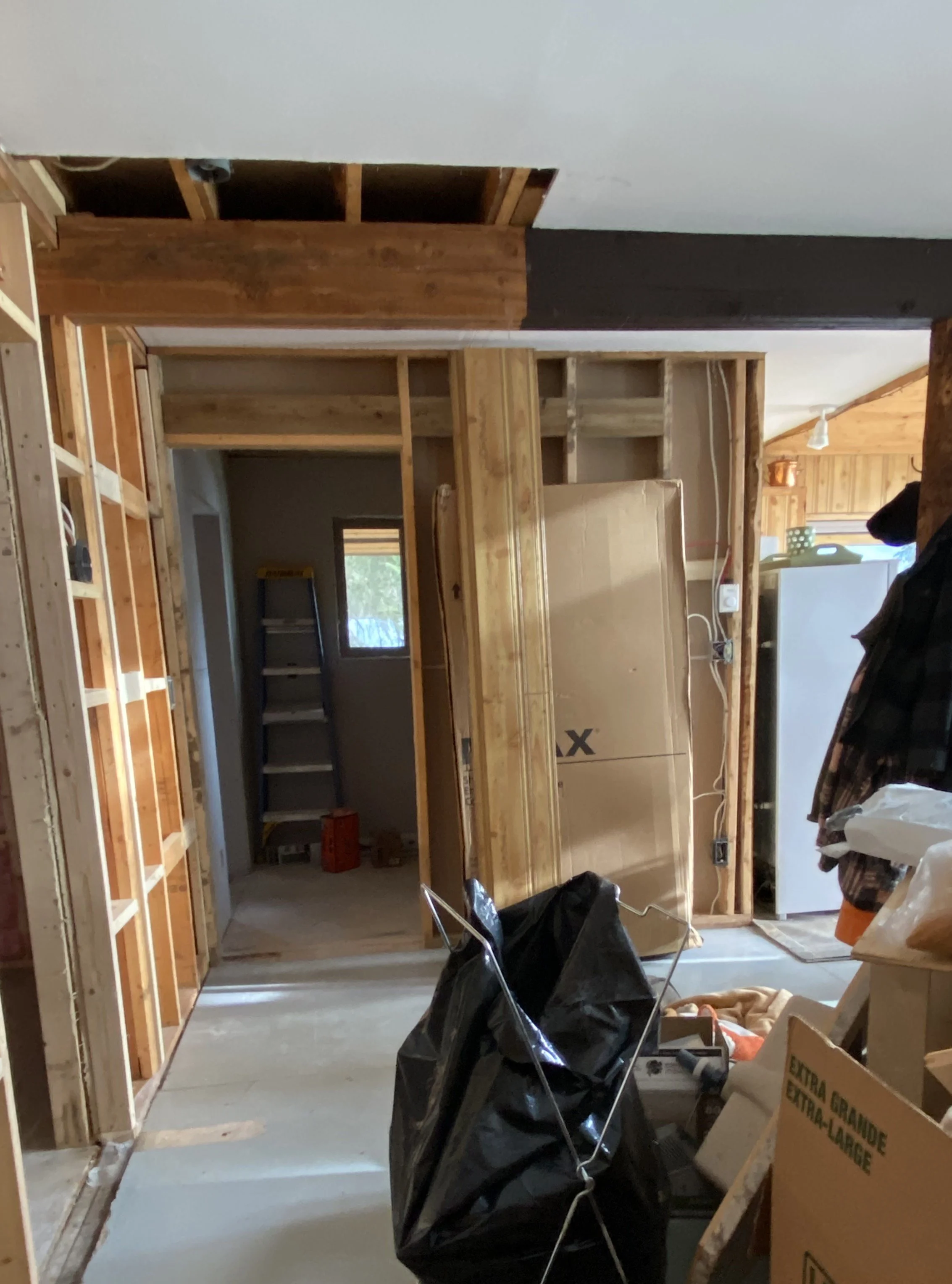
Down to the Studs
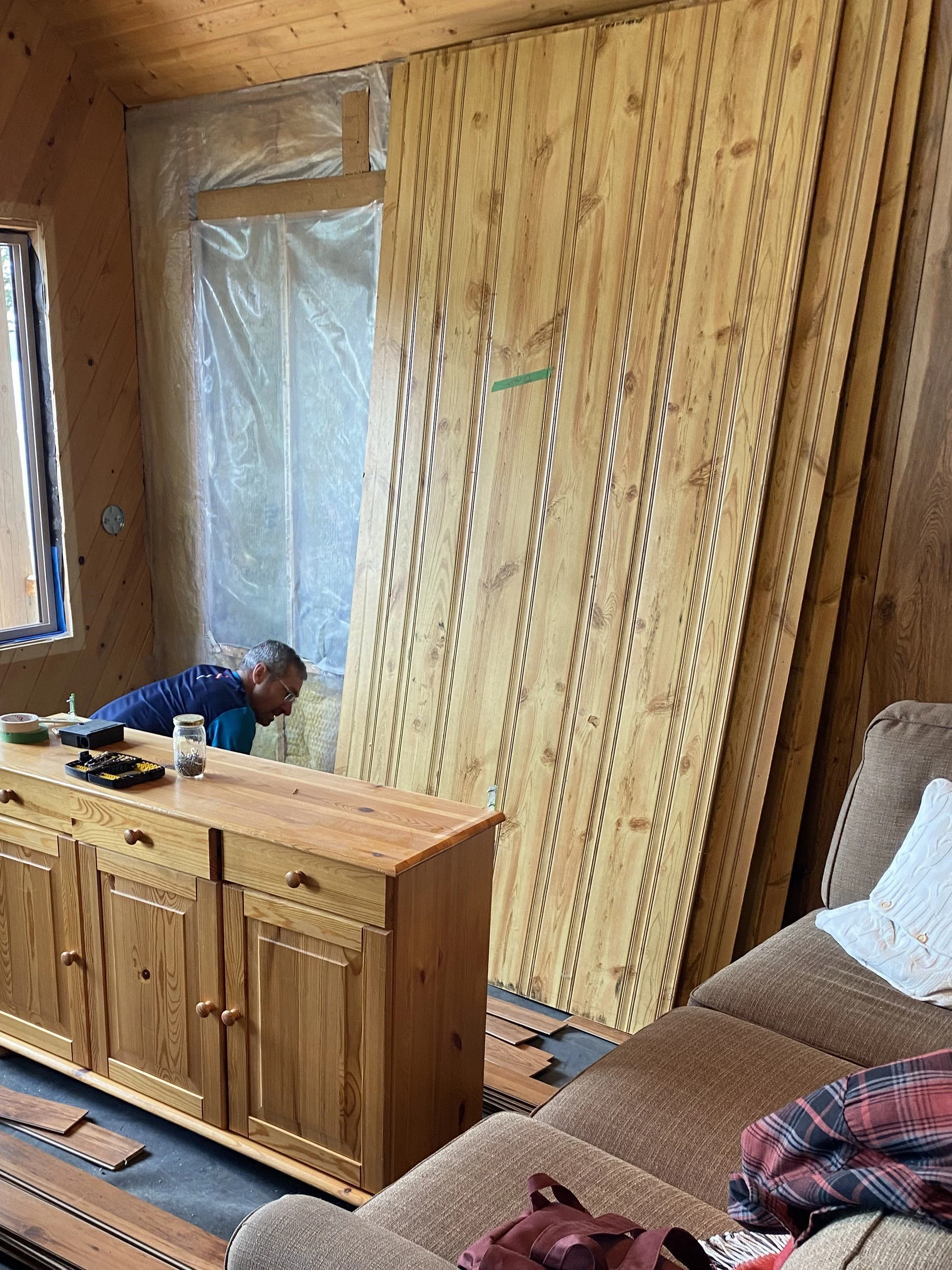
After: Closet is Gone
Salvaged Paneling
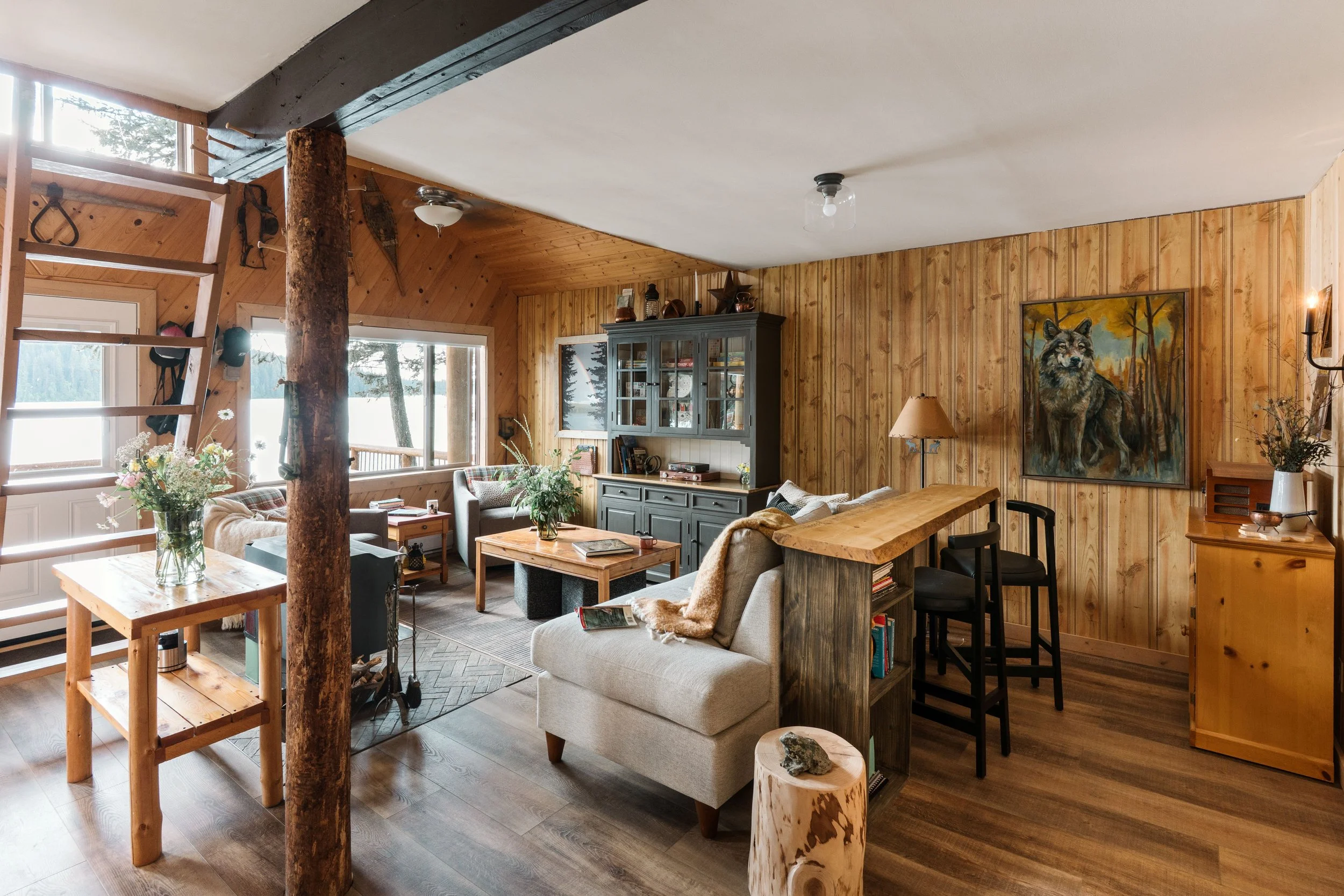
After: The far wall (with The Wolf painting) is now a full wall of same faux-pine vintage paneling, blending seamlessly with the original kitchen on the opposite side of the room.
Flooring Tile Design
Pattern, Perfectly
Proportioned
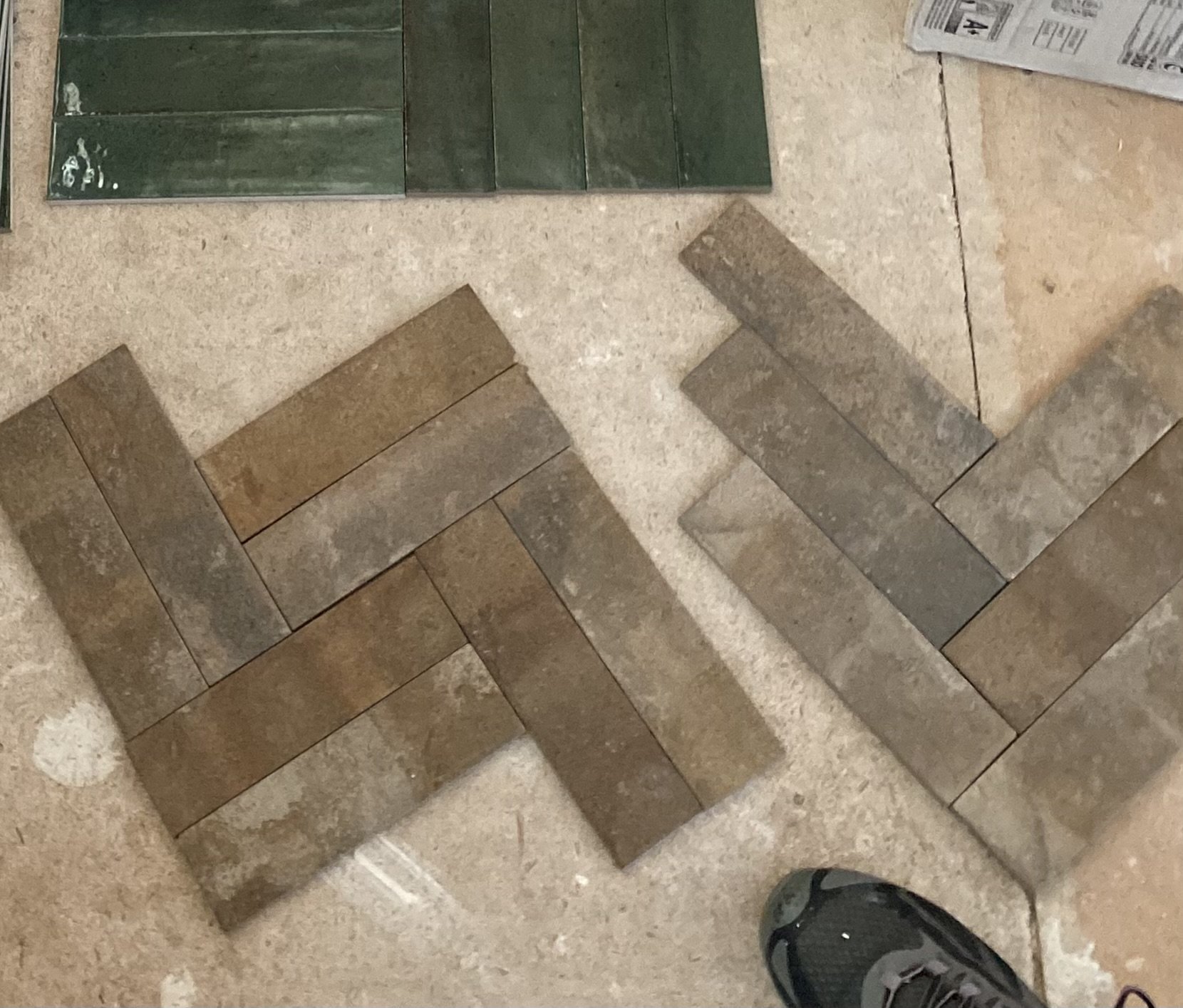
Pattern play with brick tile…
The rustic brick tile was used in both the living room and the entryway—two spaces vastly different in scale, with the living room being a large, open-concept and the entry a modest 5' x 7'.
The size of each room influenced the installation pattern, but so did the proportions of the elements interacting with the tile: the original, black, heavy wood stove in the living room, and the thin, narrow pine boards and slender bench seat in the entry.
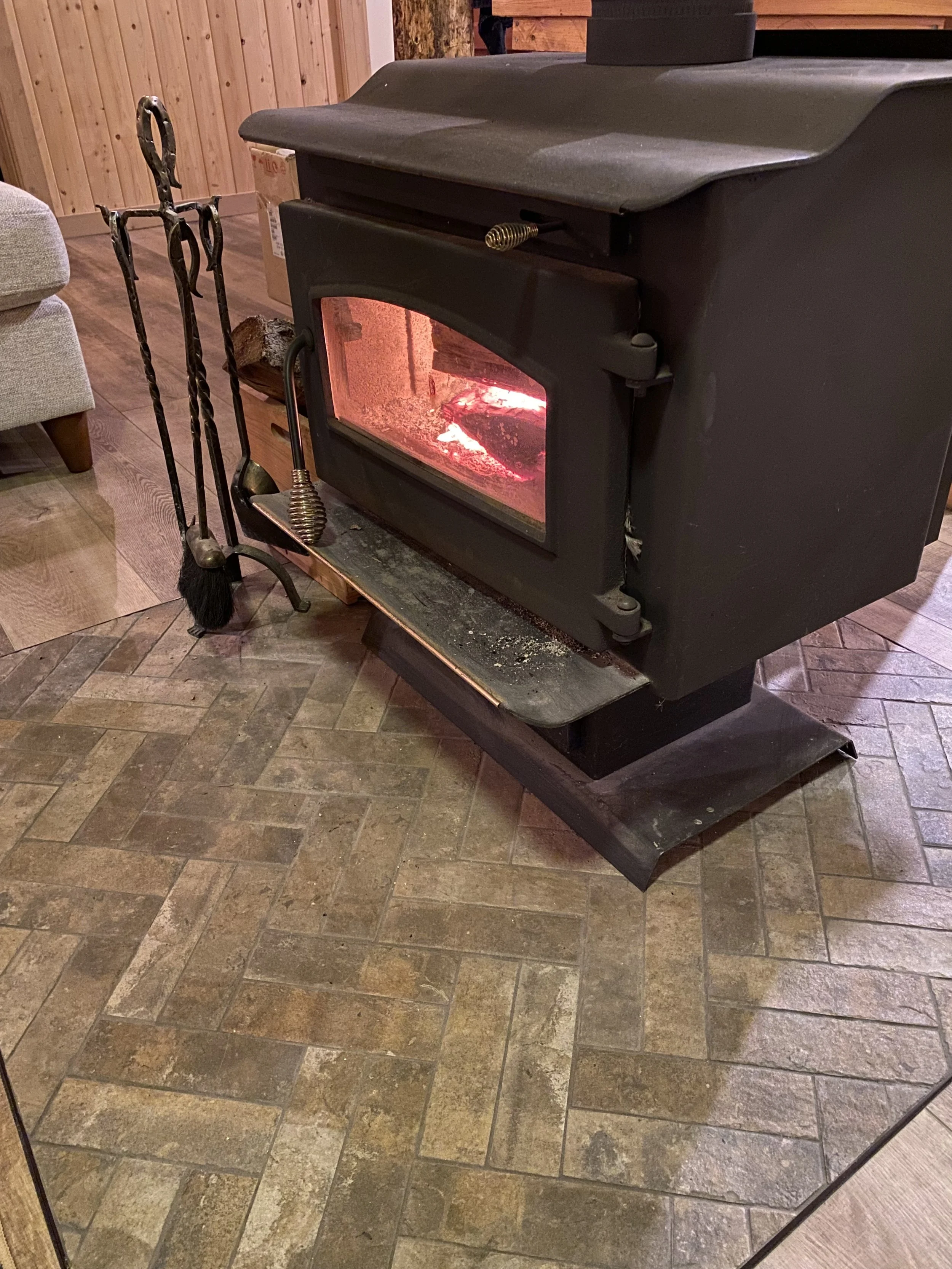
Double Herringbone Tile Installation

Traditional Herringbone Tile Installation
Choosing a tile pattern that could visually stand up to these surrounding elements created a sense of balance in each space.
Working with scale and proportion is just one design element important with creating a welcomed space.
When the materials feel balanced, the whole setting gains a quiet harmony—one that ultimately brings a calming presence to the cabin.
Lighting Design
Accent Lighting—
Dimmable for Ambience
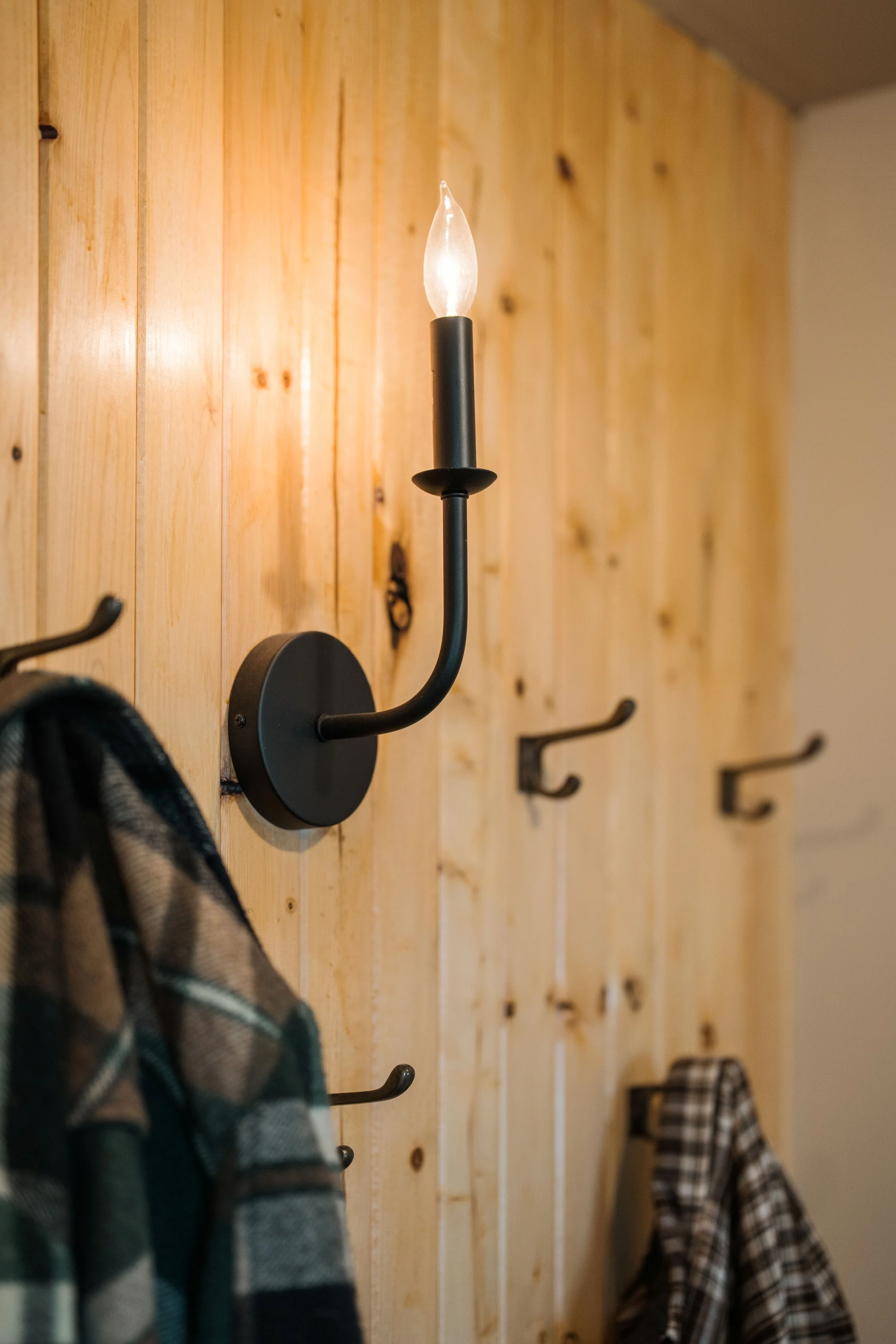
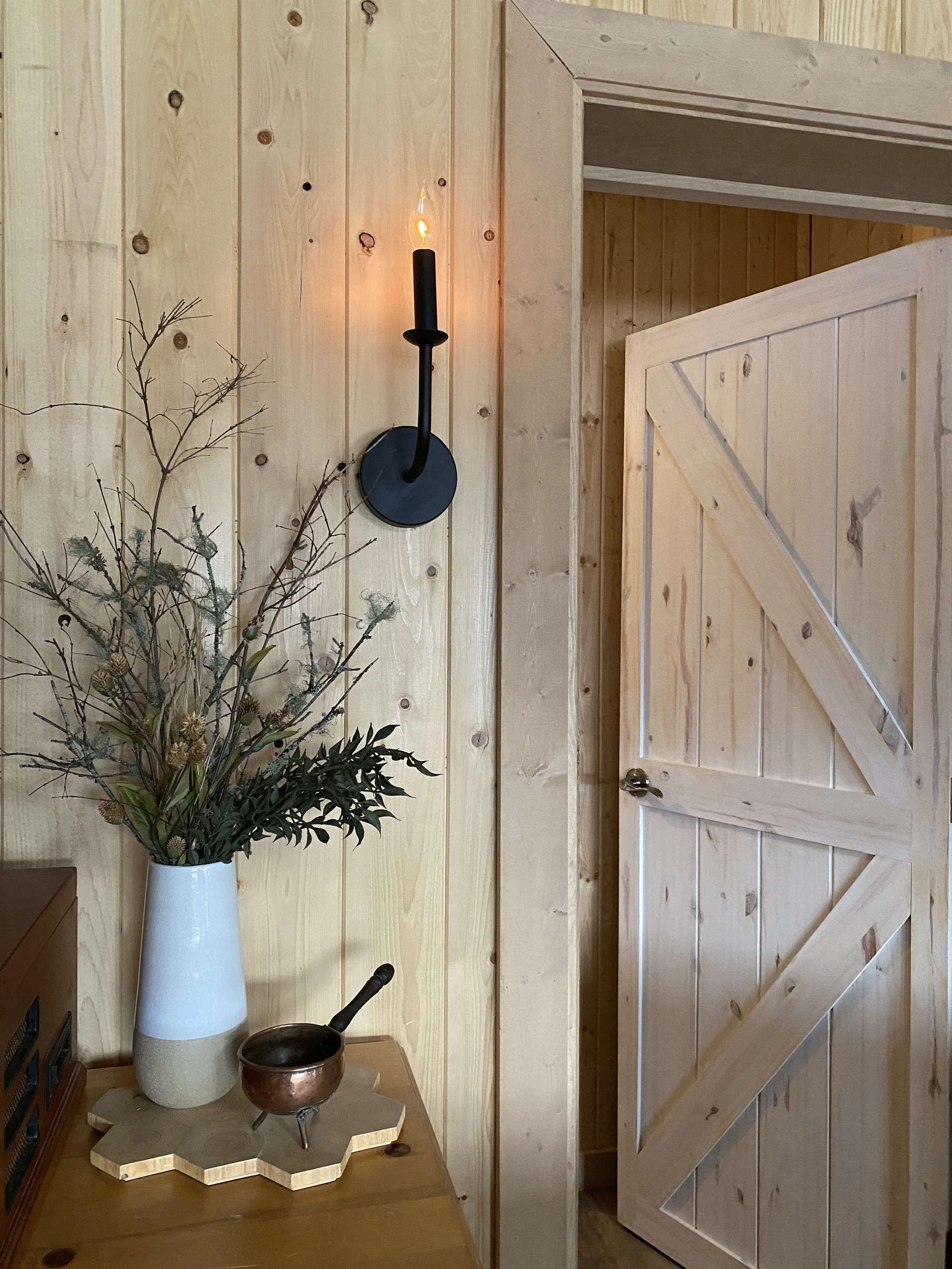
The new back wall created an opportunity to introduce subtle black sconces that bring a surprisingly big impact to the cabin.
Installed as a trio, they guide the walkway from the living area to the entry and provide a softly lit path to the bathroom—a modern nod to the old illuminated route to the outhouse.
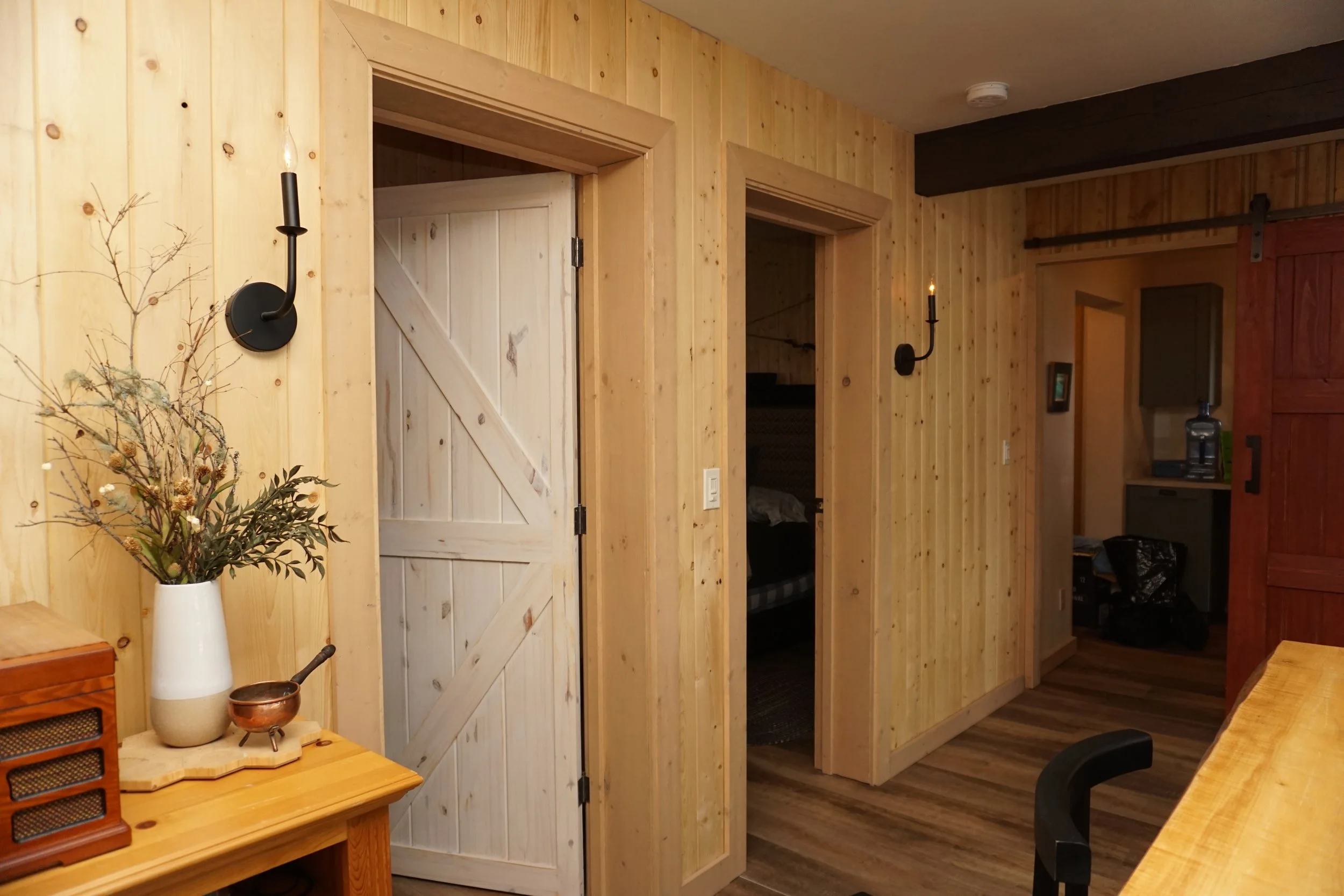
To keep controls simple, all three sconces operate from a single switch located in the main living room between the bedroom doors (shown in the image above).
This convenient placement makes nighttime trips effortless, with the dimmer offering just the right amount of light.
Three modern, black candle wall sconces are on one circuit lighting up the “path” from the main cabin living to the bathroom.
In the late afternoon as the sun sets, even a low glow from the sconces adds a warm, inviting ambience throughout the cabin.
Planning the lighting early in the design process helps a small space feel larger and more intentional.
You don’t need extra square footage to enjoy your home—you just need a smart layout that helps every part of the space work harder for you.
Furnishings & Color Palette
Living Room FOCAL POINT— and guess what?
it’s Not The Fireplace
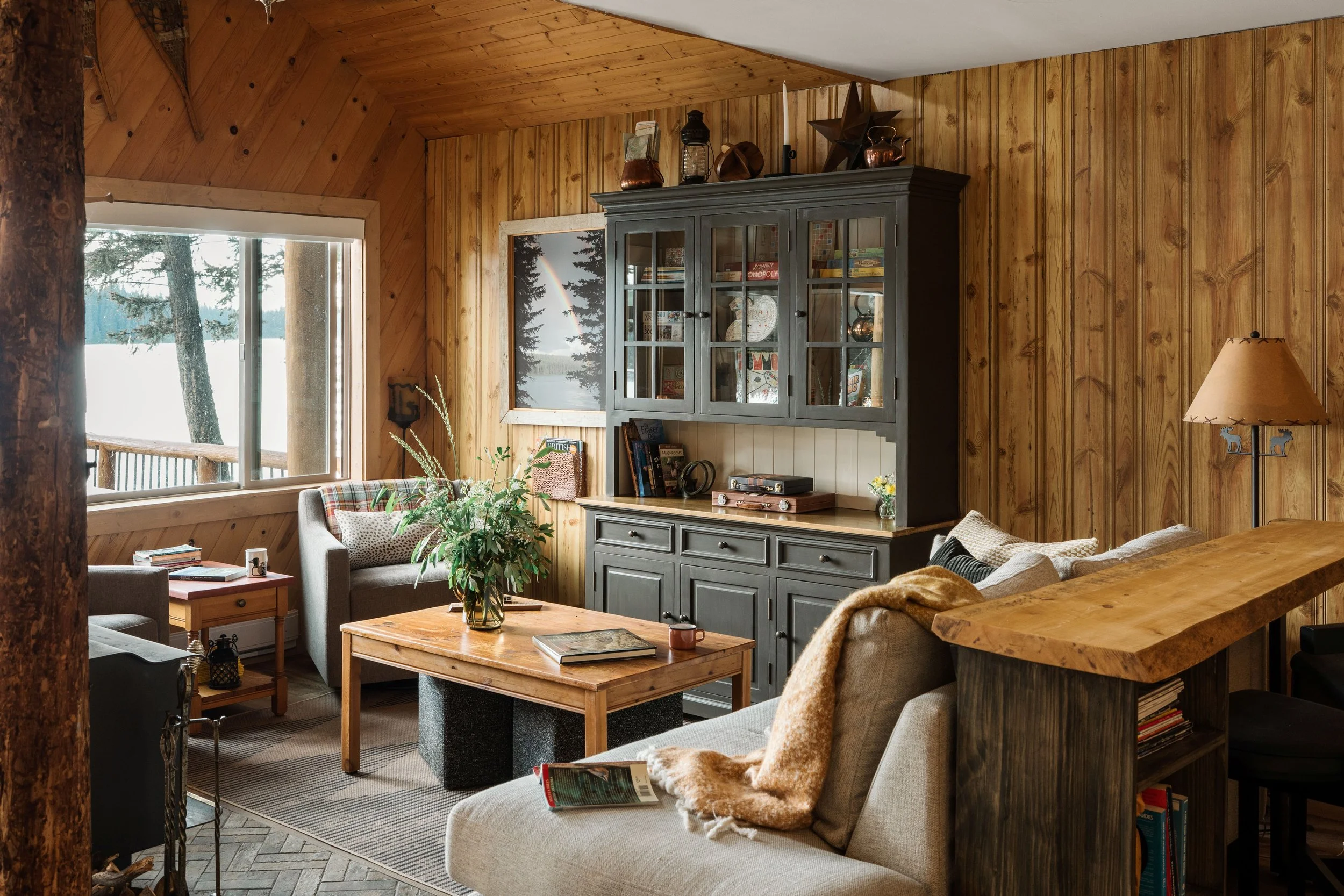
Below the coffee table sits two poufs for additional seating or using as a footrest for more comfort.
By day, the sweeping picture windows frame a breathtaking scene of the lake and the peaked mountain beyond—an effortless focal point for the room.
But once darkness settles and the view outside disappears into the night, a new contender quietly takes centre stage: the beloved Games Hutch.
Cabins hold a special kind of emotion. They’re places where stories are shared, laughter carries late into the night, and family bonds grow stronger. And nothing captures that spirit here more than the lively rounds of Rummoli or Skip-Bo that have long been a tradition in this space.
The Games Hutch isn’t just a piece of furniture—it’s the heartbeat of the cabin, a focal point that will continue to bring generations together.
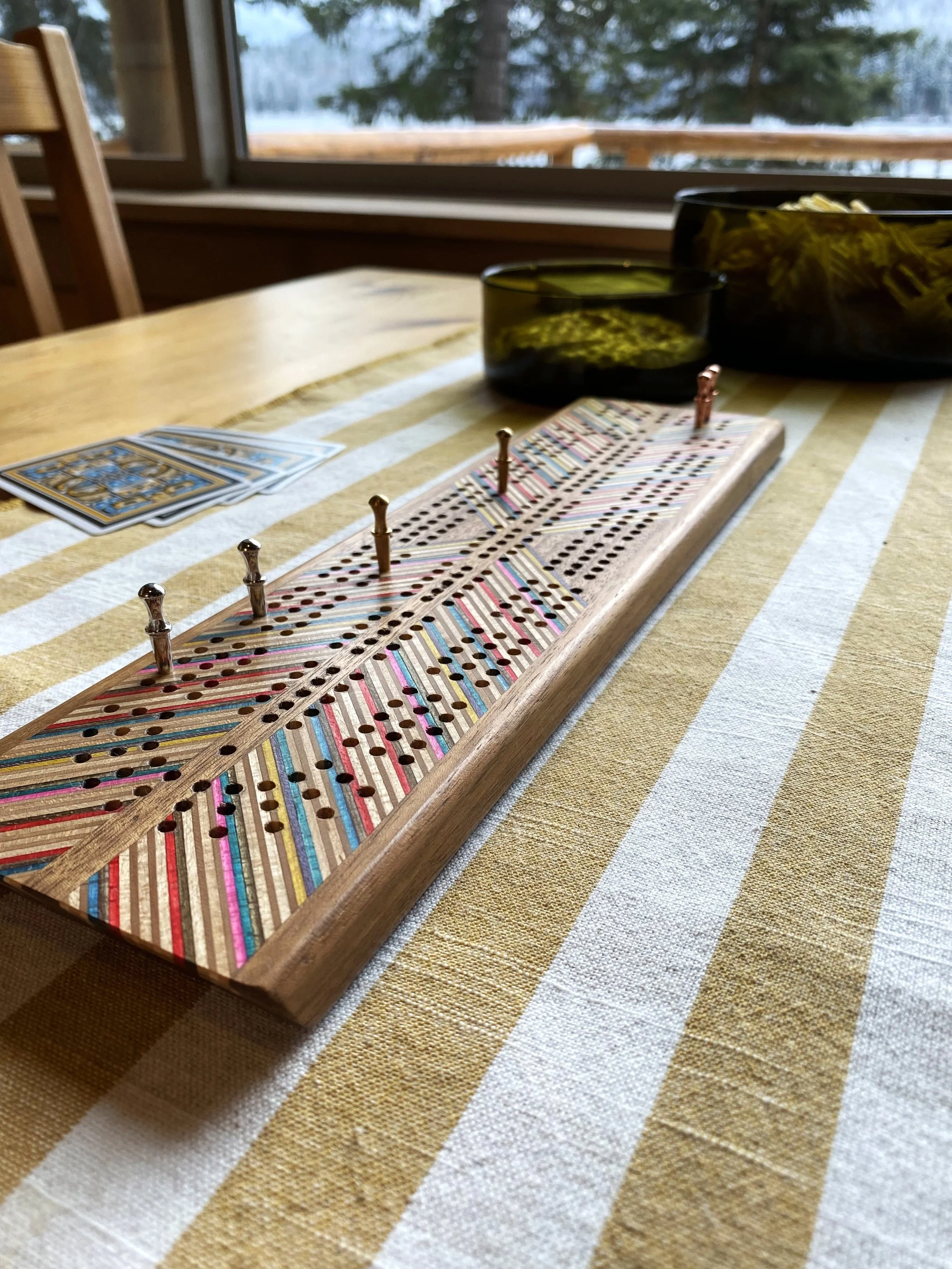
A new cribbage board made from walnut and recycled skateboards. Handcrafted by Josh Epp, Abbotsford, BC
Old IKEA vintage pine hutch and word art sign (that gets repurposed!)
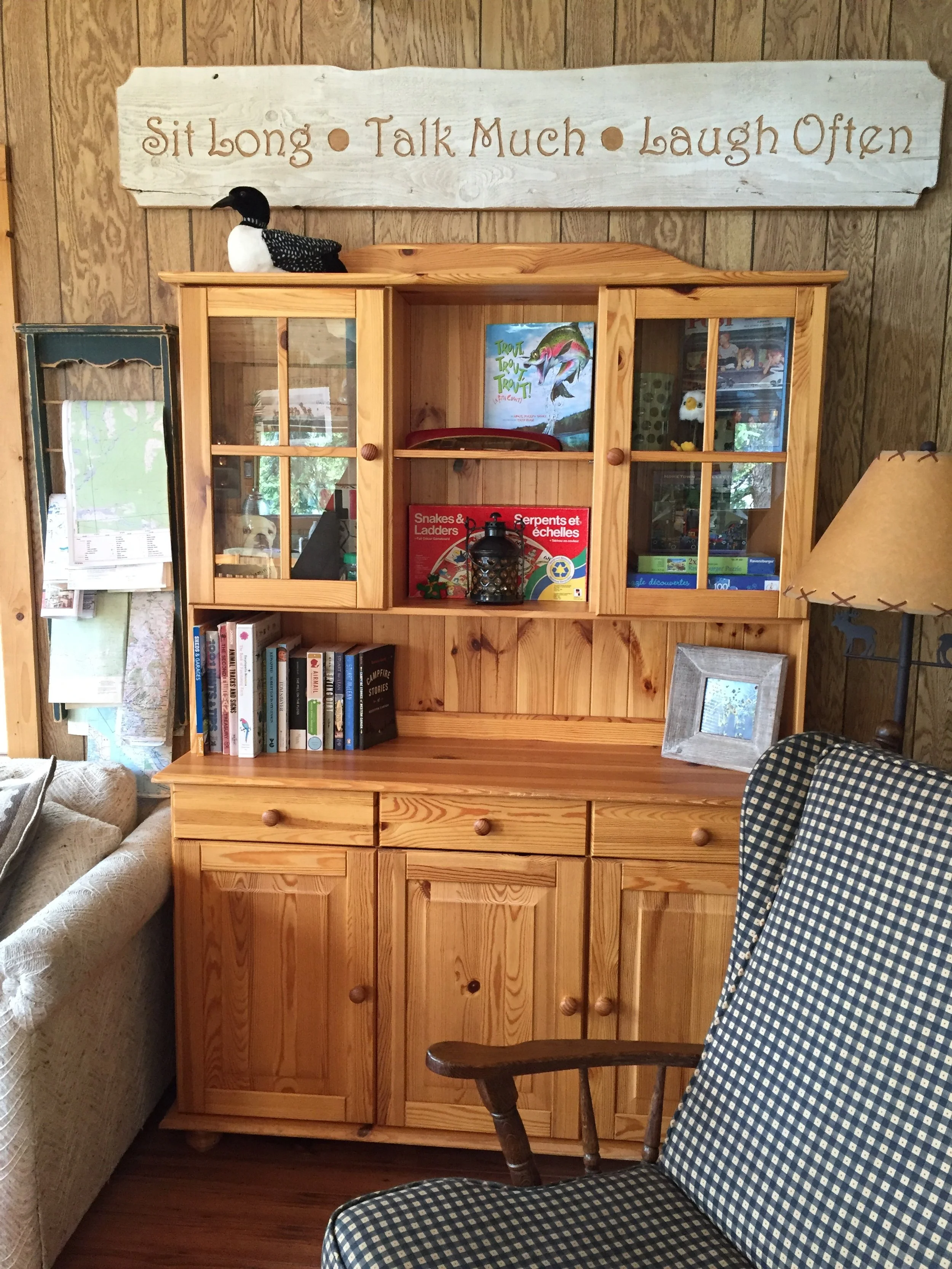
Before the renovation, a modest little games hutch sat in its place, fitting the limitations of the old layout. But once the space opened up, so did the opportunity to let this piece grow into something more substantial.
The new games hutch, a Facebook Marketplace find, was the perfect fit at 81.5” tall, 58” wide, and 20” deep.
Its traditional profile and three window-paned doors made it ideal for housing and showcasing the cabin’s collection of vintage and new games alike, while also serving as the perfect stage for a collection of neutral-colored relics from the cabin’s history.

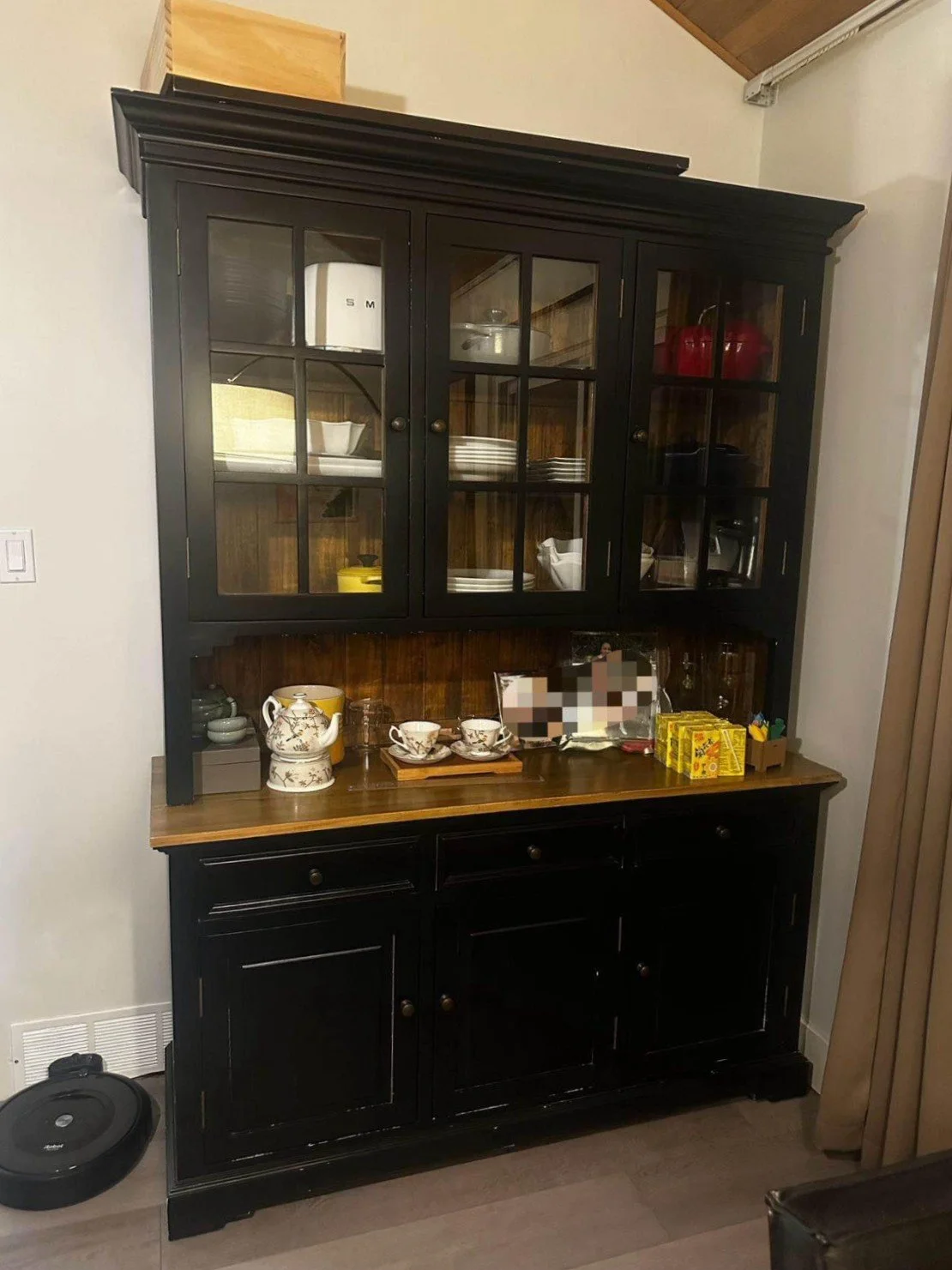
The color, however, a heavy black paint with dark stained wood from the early 2000s—it was dated and contrasting too much with the warm interior.
It needed a much lighter mood while still offering enough depth to stand out against the newly updated faux-pine paneled wall.
Drawing inspiration from the nearby swivel chairs in soft grey-brown tones, Kelly selected a deep greige from Sherwin-William’s paint collection.

Fittingly named Black Fox, the color offered a modern neutral and was perfectly suited to its new environment.

Custom, Made-to-Order
MCM Swivel Chairs
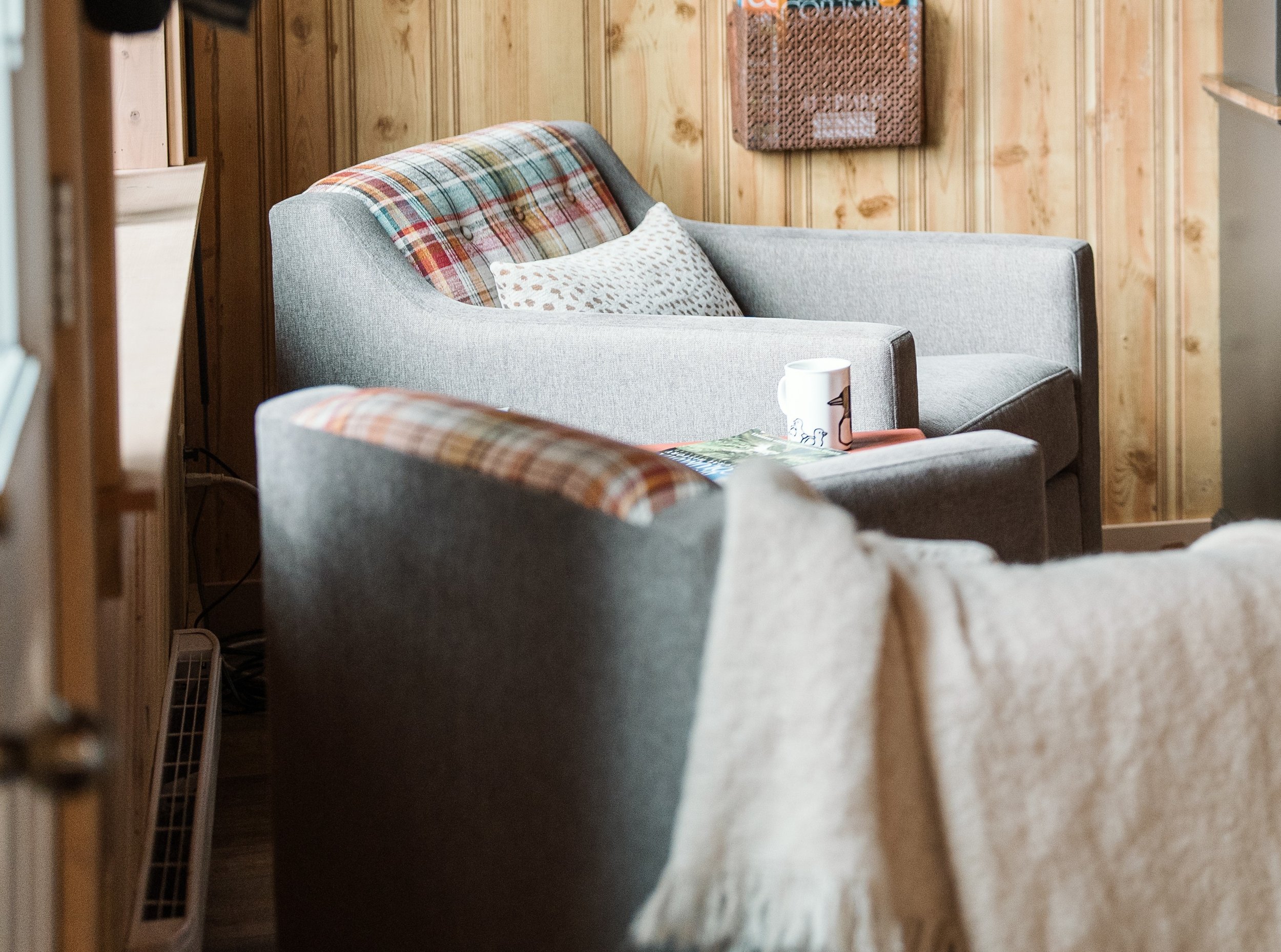
Shown here, a pair of swivel chairs from Van Gogh Designs, in a mid century modern style, buttoned back and customized with plaid fabric from Kravet.
Inspired by the classic recliners of the ’70s, Kelly set out to create a modernized version that captured their nostalgic charm without the oversized, bulky feel. She wanted something that brought a playful retro vibe to the space—familiar, inviting, and stylishly updated for today.
A touch of plaid felt essential, and when she discovered this madras check from Kravet, she knew it was the perfect fit. Its retro palette—turquoise, burnt orange, weathered red, and grounded with modern browns and greys—offered just the right amount of softly faded color.
Paired with a soft greige (color) chenille (fabric), the low-profile, mid-century–inspired, made-to-order swivel chairs from local manufacturer Van Gogh Designs became a standout custom creation.
Between the two chairs sits an authentic 1970s side table, refreshed with leftover red paint—a cabin accent color used years ago that now threads subtly through each room, adding continuity and charm.

The blend of warm greys and honey-pine tones, found both inside and out, gives the space a calm and grounded feeling.
Its neutral foundation is elevated by a subtle retro palette of softly faded reds, oranges, yellows, and turquoise and vintage green.
